Learn AI by building real impact projects with a global cohort.
Each week you learn a new AI skill and build a working project around it. After eight weeks you have a portfolio, a global network, and a residency where you apply those skills with mission-driven organizations.
Apply to October CohortCohort starts: October 26, 2026
Application Deadline: October 24, 2026
Trusted by professionals at


Bridge the gap to impact
An eight-week intensive with weekly live labs, expert masterclasses, partner projects, and a year of community access. Everything is built around real impact work.
Learn more about our take on responsible AI →
A Global Community of Practice
7,000+ members, 85+ countries, 200+ founders. Your cohort becomes your squad. The community stays with you for a year.

Build with Responsible AI
Week 1 starts with the risks: bias in datasets, the carbon footprint of compute, and the failure modes that erode credibility. You build a governance framework your organization can use immediately.

Master the Modern AI Stack
Prompting, context engineering, data pipelines, agentic workflows, and no-code deployment. Each skill is taught through a project from your field that you build that week.

Expert-Led Masterclasses
Every week features a guest masterclass from someone building with these tools in impact work right now. Past speakers include researchers from Climate Central, founders in climate fintech, and behavioural scientists working on AI-assisted sustainability.
A Global Community of Practice
7,000+ members, 85+ countries, 200+ founders. Your cohort becomes your squad. The community stays with you for a year.
Build with Responsible AI
Week 1 starts with the risks: bias in datasets, the carbon footprint of compute, and the failure modes that erode credibility. You build a governance framework your organization can use immediately.
How it works
An architecture for AI-powered impact solutions
The core Intensive runs eight weeks: seven weeks of AI skills and builds, plus an Integration Week at the midpoint. You join a small squad and ship a tangible artifact each week, culminating in a user review and demo day.
Apply NowApplication Deadline: October 24, 2026
A live cohort of professionals from across the globe, with weekly labs and a year of community access after graduation.

The foundation everything else builds on. Bias in datasets, the environmental footprint of compute, and the guardrails that keep your builds credible.

Learn how to work with data using AI. Find, clean, and interrogate public datasets, then turn what you find into visuals that hold up to scrutiny.

Design AI agents that monitor funding opportunities, route research, and automate the recurring tasks that eat your week.

Participatory storytelling that reaches people who aren't already aligned. Narrative structure, audience science, and AI as your production engine.

By week 8 your build is in front of real users at a mission-driven organization. No engineering background required to get there.

Sectors of impact
Built for mission-driven work
The AI skills are the same in every sector. The data, the stakeholders, and the builds change with your field, so every exercise is set in the kind of work you already do.
Teams working on emissions, energy, adaptation, and climate policy. This is where Terra.do started, with a network of 7,000+ climate professionals.
- Emissions and climate-risk dashboards
- Policy briefs drafted from source documents
- Agents that track funding and regulatory updates
Organizations working on health, education, housing, and livelihoods, where small teams need to analyze data and reach more people with the same staff.
- Community needs analysis from survey and census data
- Program reports and stakeholder decks
- Intake and outreach workflows
Foundations, NGOs, and the program and development teams inside them, where research, reporting, and fundraising take up much of the week.
- Grant research and prospect tracking agents
- Impact reports built from program data
- Donor and board communications
Public sector & policy
Agencies and policy teams who draft briefs, analyze public data, and respond to constituents.
Global health
Health programs that track outcomes, summarize research, and report to funders and ministries.
Education
Schools and education nonprofits who build learning materials and work with student data responsibly.
Sustainable business
Sustainability and ESG teams inside companies who handle disclosures, supplier data, and internal reporting.
Food & agriculture
Organizations working on farms, supply chains, and food security with field and market data.
Humanitarian response
Aid teams who need clear situation reports pulled together from scattered sources.
Journalism & media
Newsrooms and creators who verify sources, analyze datasets, and build explainers.
Research & academia
Researchers who use AI for literature review and data cleaning, and to explain findings to a wider audience.
How we compare
What sets the Intensive apart
Most AI courses teach general productivity on generic business examples. The Intensive teaches the same tools on real data from climate, social impact, and nonprofit work, with responsible use in every week: what AI costs the planet, where it fails, and when to use it at all.
Read our take on responsible AI →What you learn
Data analysis, agents, storytelling, and responsible use, applied to impact work.
Prompting tips to speed up tasks you already do.
AI's footprint
The electricity, water, and emissions behind the AI you use, weighed against the benefit.
Not covered.
Judging AI use
A five-question filter for any AI proposal, from emissions to who benefits.
Assumes AI is the answer.
Practice material
Real datasets and stakeholder scenarios from your field.
Generic business examples and sample data.
Your output
A new build every week and a tool shipped to a mission-driven organization.
A certificate or one capstone on sample data.
Tools
Frameworks that work with Claude, ChatGPT, or Gemini.
Skills tied to one vendor's product.
Format
Live cohort from 85+ countries, plus a year of community access.
Self-paced recorded videos.
Learn from practitioners shipping change-making products
The Studio faculty are building AI tools for climate and impact work full-time. Everything they teach comes from work they are doing right now.

Anshuman Bapna
Founder & CEO, Terra.do
Serial entrepreneur who has built and sold multiple technology companies. Founded Terra.do to get 100 million people working on climate. He sees AI as the tool that makes that timeline possible.

Nilesh Bansod
Head of Product & COO, Terra.do
Leads product and operations at Terra.do, building the platforms that connect the global climate workforce. Deep experience in product management and scaling tech solutions, with a builder-first approach to applying AI for climate impact.

Bodhi Debnath
Head of Growth, Terra.do
Connects AI learning and climate action at Terra.do. Combines full-stack development with product-led growth to turn complex technology into tools and stories that help climate professionals ship faster.
The curriculum
Every week you learn a concept and build something real. Week 5 is a skill-free Integration Week to catch up and consolidate. By week eight you have a portfolio of working projects.
Application Deadline: October 24, 2026
Responsible AI
The Concept
The ethics, bias, and environmental footprint of AI, paired with the problem you want to solve.
The Build
AI Risk Policy + Problem Brief. Design a governance framework for responsible AI and define the problem you'll spend 8 weeks solving.
AI as Thought Partner
The Concept
Move from 'intern' tasks to strategic synthesis. Build the prompt, context, and memory habits that compound across every week that follows.
The Build
Strategy Copilot. Configure an assistant to read 50+ reports and extract decision-ready insights.
Data Insights & Visualization
The Concept
Finding, cleaning, and interrogating public datasets. Turning what you find into visuals that communicate clearly.
The Build
Data Audit + Chart. Turn a messy public dataset into three defensible insights, each backed by a clear visual.
Storytelling and AI
The Concept
Participatory storytelling that reaches people who aren't already aligned.
The Build
Audience-First Artifact. A post, pitch, or infographic that reframes your finding for a specific reader.
No new AI skills to learn. A full week to catch up, consolidate, get 1:1 time, and run peer reviews on what you've built. — Consolidation. Close out your Problem Brief, Data Audit, and Audience-First Artifact. Breathe. Then head into the build-heavy back half rested.
Agentic Workflows
The Concept
Designing autonomous loops for monitoring, research, and the work you already do.
The Build
Custom Skill or Agent. Build a skill that automates a recurring task in your work.
Shipping to the Real World
The Concept
No-code builders, web deployment, and closing the last-mile build-to-user gap.
The Build
Public Prototype. Ship something someone outside the course could open in a browser and understand in 30 seconds.
Bridging the Deployment Gap
The Concept
Why most builds die between 'it works on my laptop' and 'a real user can use it.' The paths forward once yours doesn't.
The Build
User Review + Path Forward. Put your build in front of real users, absorb the feedback, and decide what's next — park it, keep building, or go deep.
Weekly schedule
A steady rhythm of live sessions, office hours, and async work.
| Tue | Wed | Thu | Fri | Sat | Sun | Mon |
|---|---|---|---|---|---|---|
Live Class 8:00–9:30 am PT | Office Hours 8:00 am PT Office Hours 8:00 pm PT | Demo Day 8:00–9:00 am PT | ||||
Assignments | ||||||
Reading materials for next week | ||||||
Async continuous support | ||||||
Built at Studio
What fellows build here
Working tools from recent cohorts, live and public. Most of the people who built them had never deployed software before week one.
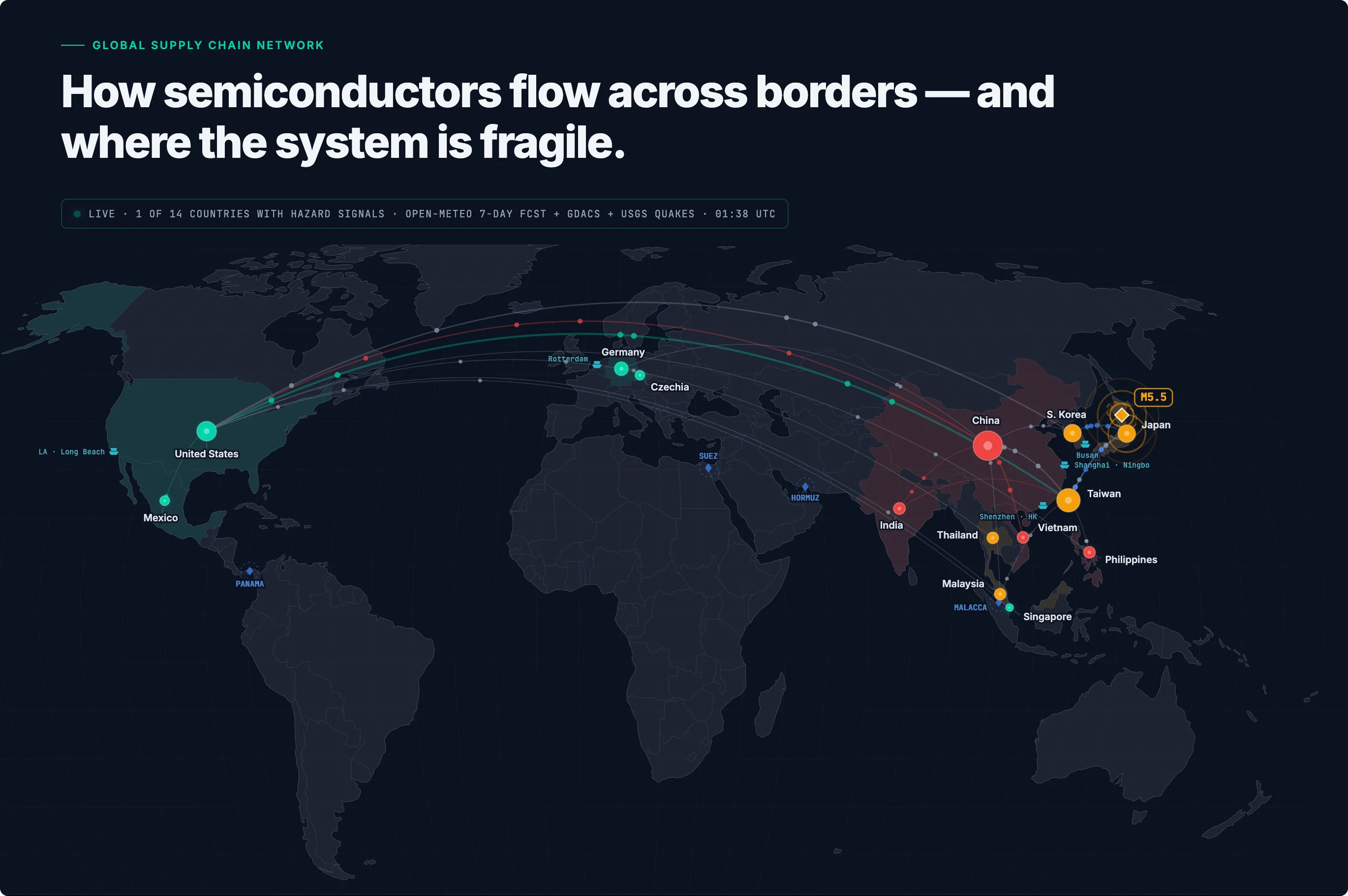
CONVERGE
Live climate, regulatory and supplier-concentration risk across 15 semiconductor fab clusters, with a personalized exposure score
See the project →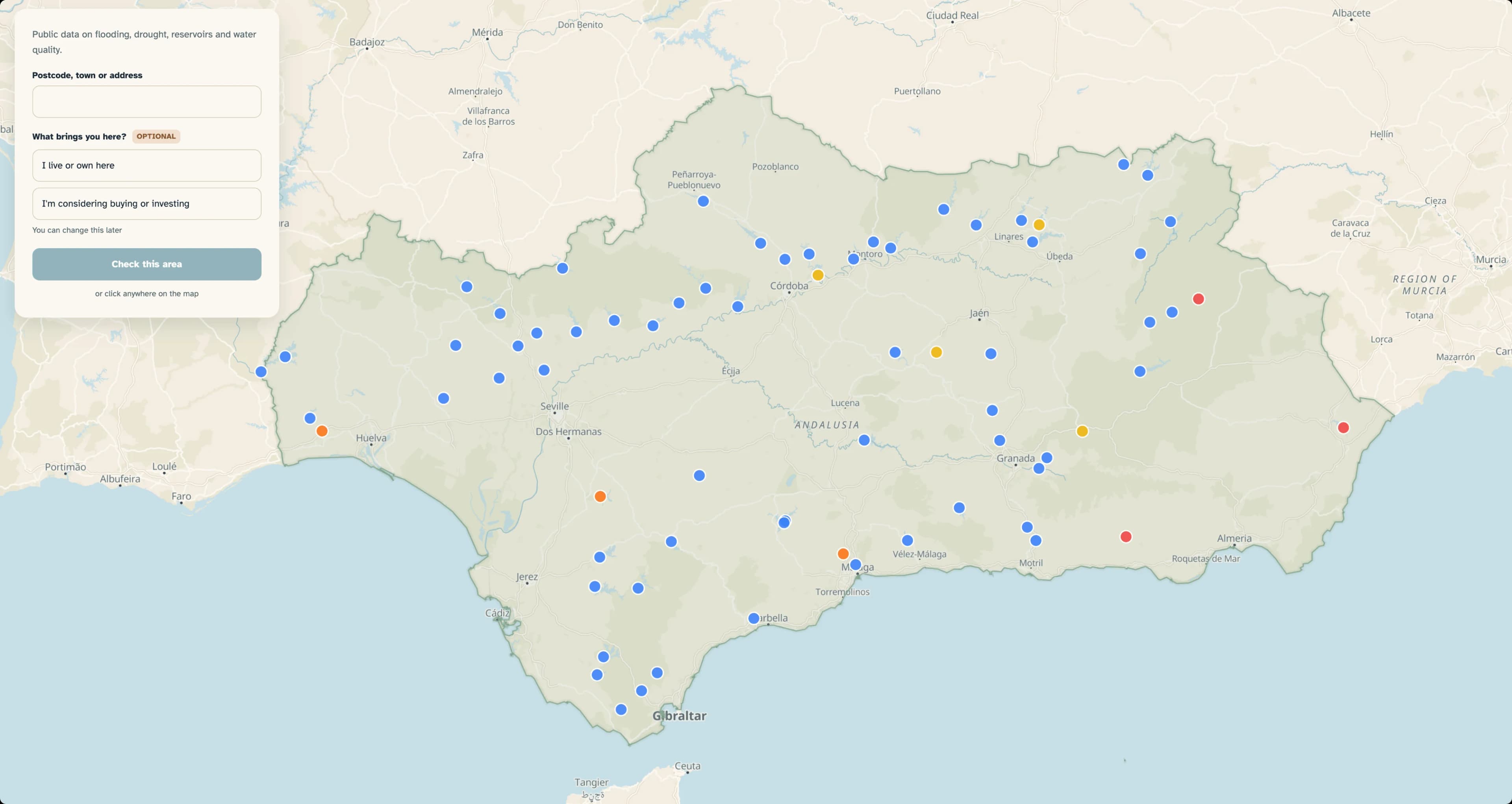
Water Risk
Water risk in Southern Spain, explained for the people who live there
See the project →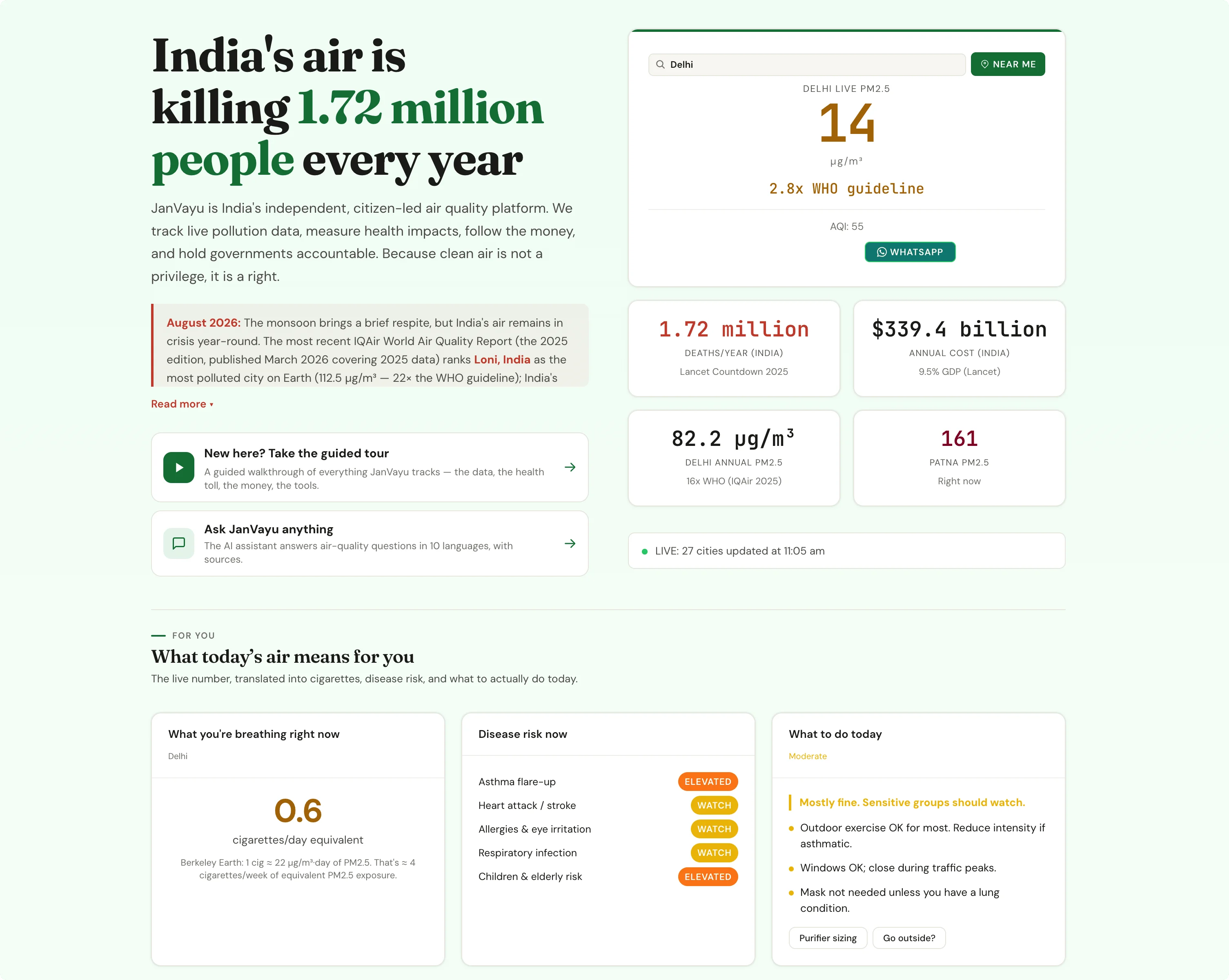
JanVayu
Turns India's air quality readings into plain answers about what to do today and who is accountable
See the project →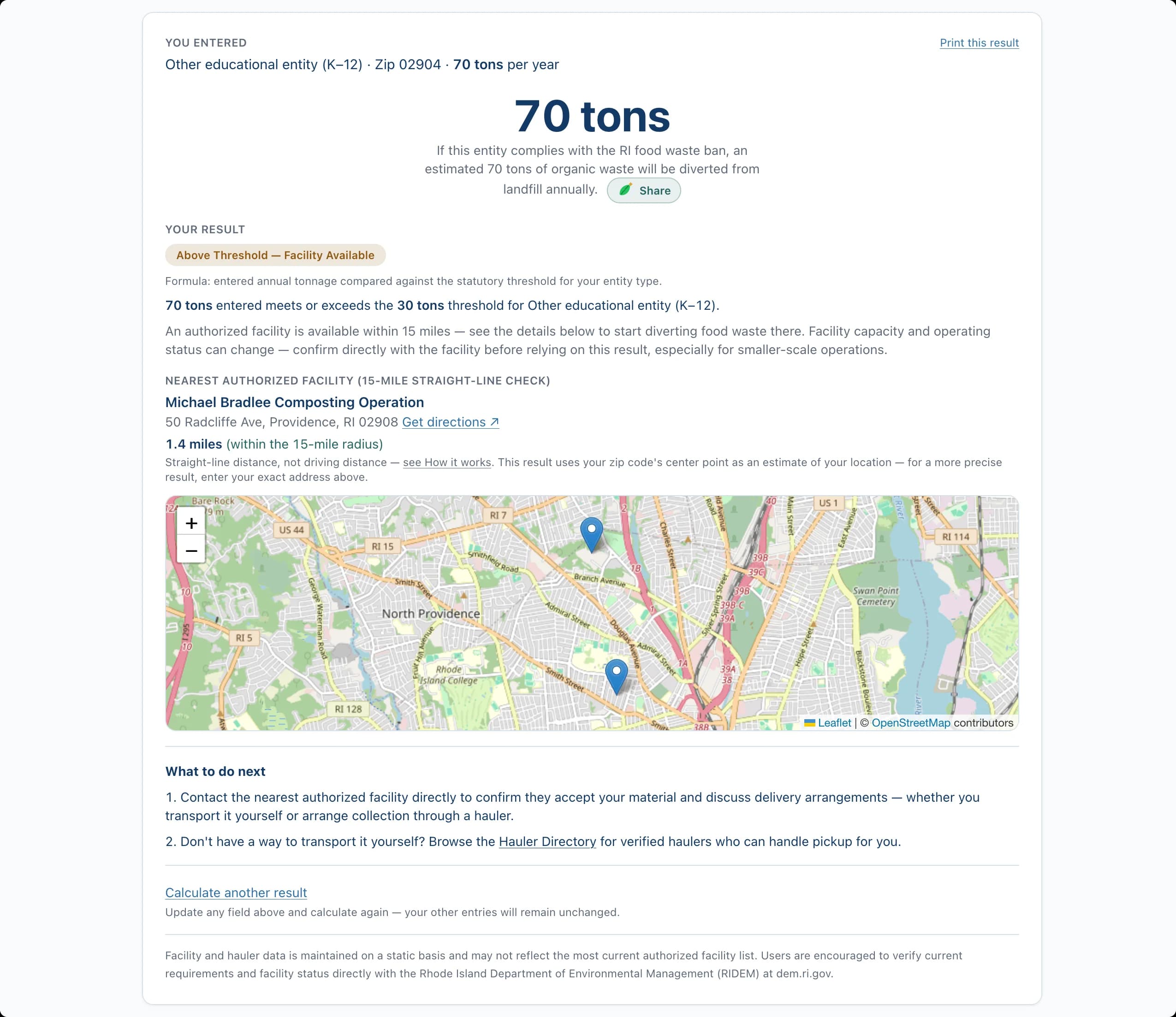
RhodeWaste Organics Navigator
Find out if Rhode Island's food waste ban applies to you, in under two minutes
See the project →Join an Open House
A live walkthrough of the curriculum, the weekly rhythm, and what Cohort 1 built. The faculty answer questions throughout.
Thursday, May 7
8:00 AM PT / 11:00 AM ET
Or watch a past session recording
Quick Answers
What kind of time commitment should I expect?
6 to 10 hours per week. The Tuesday live lab is the only fixed time. Everything else is async coursework and project work on your own schedule.
Do I need coding experience?
No technical skills required. We teach everything from scratch with hands-on projects. If you can navigate a spreadsheet or write an email, you have the skills to start.
What will I build?
Real AI-powered projects: datasets, dashboards, agents, and prototypes for impact work. Tools you can use in your work immediately.
Who are the instructors?
Terra's leadership team and guest practitioners who are building AI tools for climate and impact work full-time. Every masterclass comes from someone doing this work right now.
What happens after the 8 weeks?
A full year of community access with ongoing masterclasses, networking, and project work with leading mission-driven organisations.
What learners said after building with us
Join a global community of changemakers
7,000+ professionals across 85 countries, including 200+ founders. Your cohort becomes your working group during the intensive. The broader community stays with you for a full year after graduation.

Attend live, intimate sessions with leading scientists, founders, and AI practitioners building tools for the field right now.
How Can Trustworthy Data and AI Accelerate Climate Action?

Transform Geospatial AI Insights into Measurable Impact

How AI and Machine Learning Will Transform Weather and Climate Forecasting

Past masterclasses have featured leaders from Google, NASA, IPCC, and more.
One price, all access
50% off for Terra.do fellows. Need-based financial aid and PPP pricing available.
Cohort starts October 26, 2026
Application Deadline: October 24, 2026
8-Week Intensive
Eight weeks of builds. Each week ends with a working project you can use immediately.
Partner Projects
Live project briefs from mission-driven organisations. Build with real data for real stakeholders.
1 Year Community Access
Events, masterclasses, demos, and a 7,000+ member global network that stays with you after graduation.
Frequently Asked Questions
No technical skills required. We teach everything from scratch with hands-on projects. If you can navigate a spreadsheet or write an email, you have the skills to start.
Professionals in climate, social impact, nonprofits, philanthropy, and the public sector who want to use AI to accelerate their work. No coding background required.
Everything is in the context of impact work. The projects are real, the partners are real organisations, and the community stays with you for a year after graduation.
6–10 hours per week. The Tuesday live class is the only fixed time. The rest is async coursework and project work on your own schedule.
No. We cover the full modern AI stack: prompting, agents, data pipelines, visualisation, and no-code deployment, all applied to real problems from mission-driven organisations.
We offer need-based financial aid, PPP pricing, and 50% discount for Terra.do fellows. Reach out to us directly — we want to make this accessible.
Learn AI by building real impact projects with a global cohort.
Join a global cohort of impact professionals learning AI by building together. Each week ends with a working project you can use immediately.
Cohort starts October 26, 2026
Application Deadline: October 24, 2026